Combatting COVID-19 in Cambridge

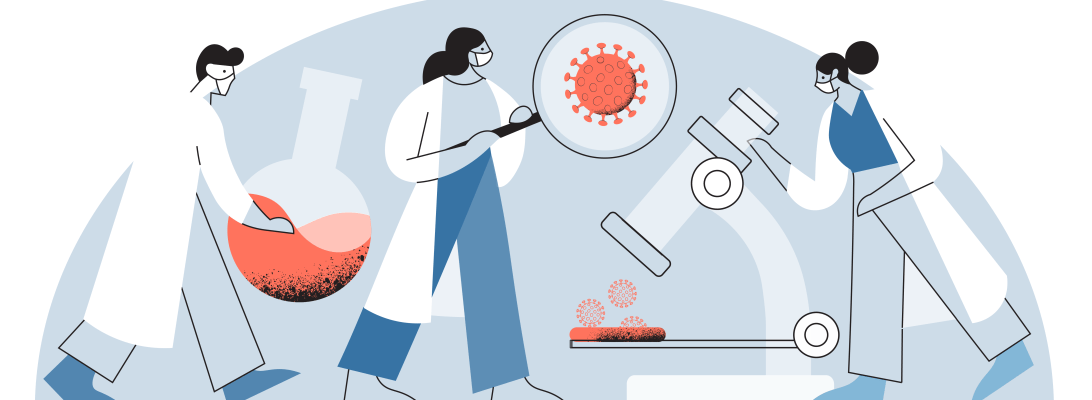
From the start of the pandemic many scientists around the world have been working tirelessly on finding methods to combat the virus. I have had the opportunity to visit a small team in the department of Biochemistry at Cambridge University to understand the methods and processes they use when tackling a virus.

Five scientists have volunteered their time and incredible knowledge to fight the virus and have recently seen some encouraging results.

To understand their process, we must first understand the virus itself. The Corona Virus is not a living organism, so it lacks the ability to replicate independently. Therefore, it uses living cells inside us to replicate itself. Below is a brief depiction of a virus cycle once it enters the body.
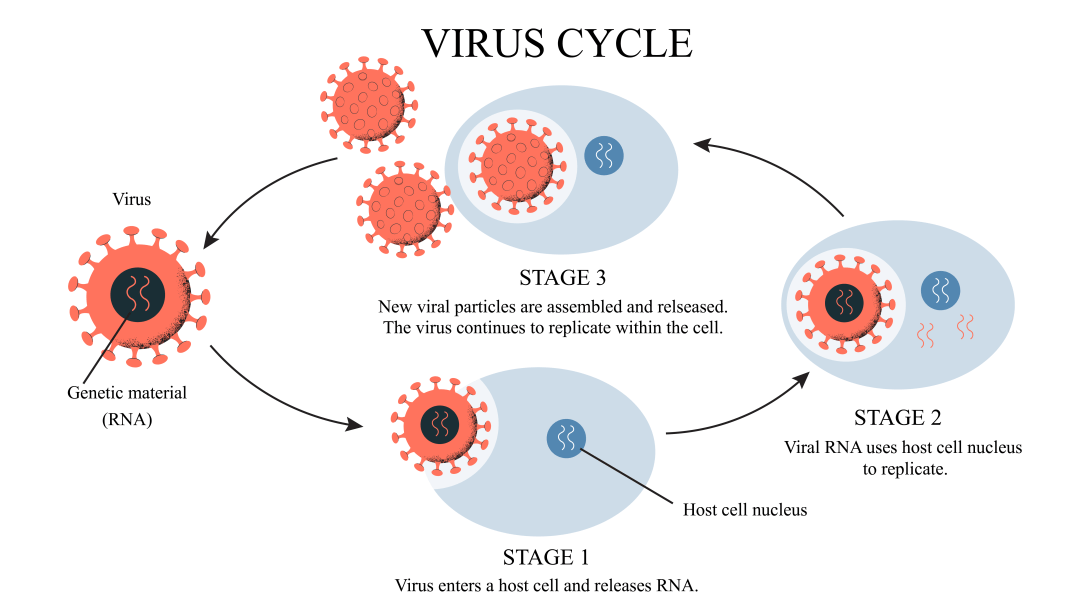
COVID-02

The scientists’ strategy to combat the virus is to stop it at stage 1, when the virus releases viral RNA (a molecule which converts information stored in DNA into proteins), this will prevent it from initiating viral protein synthesis and replication. To stop it at this point the scientists need the help of an enzyme (a molecule that speeds up the rate of a chemical reactions) our bodies already produce to cleave (cut) off critical parts of the RNA molecule to make it largely inactive.

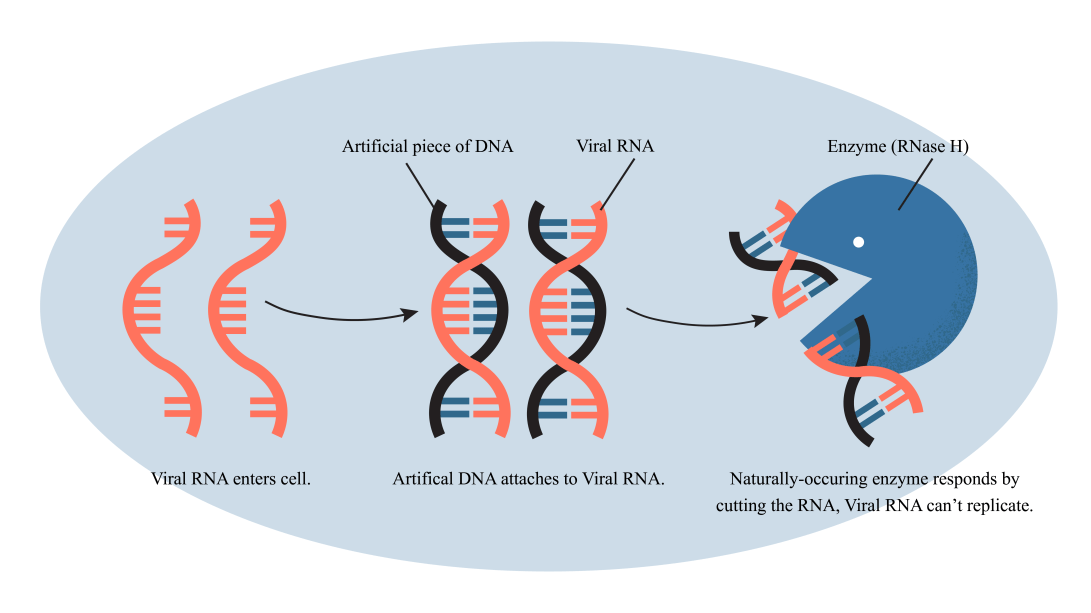
We naturally have enzymes (RNase H) in our bodies that recognise and cleave a gapmer (coding sequence) in DNA and RNA hybrids (this is when a piece of RNA and DNA are attached).

The scientists have developed an artificial piece of DNA that will attach to the viral RNA, triggering the enzyme to cut the RNA and inhibit any chance of replication. The DNA has been modified to last a long time in our bodies and be actively taken up by cells to ensure lasting protection.

An understanding of similar viruses previously studied gives a good idea of the shape and structure of the current corona virus (2) RNA. This makes it easier to make synthetic DNA which can bind to it.
COVID-03

There are 5 stages of testing to see if this work will be completely successful.

  • Stage 1, use purified viral RNA, artificial DNA and the enzyme inside a test tube to see if the DNA would successfully attach to the RNA and the enzyme would cut the RNA after attachment.
  • Once stage 1 works the artificial DNA are tested for ability to target viral RNA in human cell cultures. Here they see whether the desired DNA-RNA interactions happen successfully inside human cells, and whether they are successfully cut by the enzyme found inside our cells. This step needs to be done as the conditions and volume of enzyme may vary inside cells compared to tests done in tubes. After stage 2 is successful the project will be continued by other experts in the field.
  • Stage 3, a virus replication test is done, where cells are infected by the virus then treated with artificial DNA. The scientists assess the DNA’s effectiveness by comparing the quantity of viral replication by cells with and without artificial DNA.
  • Stages 1, 2 and 3 are perfected until there is confidence and consistency in the results.
  • Testing with people.

It’s a lengthy and complex process and so far, the team have accomplished stages 1 and 2, and are now trialing stage 3. Although Ben describes the group as a small cog in a big machine, we can see just how important they are in getting this project off the ground and running by setting a foundation for further steps. Overall, these scientists can be very proud to be part of this worldwide effort and what they have accomplished so far in these trying times.

Travel writing, colorado

Under a hazy cobalt moon,

A twinkle of city lights at dusk,

Crippled juniper trees turn black,

Mosquitos dance to the cricket’s song,

Brown bears stir in the night,

Beyond blue peaks the sky flashes silver,

Sweet rains wash away the conversations of night,

Until the sun breaks into an orange yolk.

14th July 2014

A six-seated plane lifted us over the Navajo nation. Dad and me excitedly chirped about our future travels and exploration in the next few days. The land below resembled a deserted planet, dotted with dusty craters, and scattered debris. Distant clouds aching with water blundered across the sky and relieved their burden onto the land.

We landed in a storm, water hitting the house-sized airport in furious bursts. We pushed the glass doors out into the car park, the smell of wet sand and rich clay filled the air. Spotted towhee, a local bird, balanced on Arizona rosewood bushes and sang sweetly about the rain. After sliding into our rented vehicle, we glided up and down the valleys and slipped in and out the sun’s gaze as we headed to our lodging.

 *         *        *

The sun ducked beneath pink-skirted clouds, breaking into an orange sunset. Night began to fall.

Our bags were left in the cabin at Far View Lodge as we scouted out the campsite where my dad’s close work friend had invited us to an evening meal.

We drove on until late evening, the night sky speckled with stars. As we crawled into the campsite our dipped headlights caught a glimpse of a young brown bear wondering across our path. We hushed in awe of this magnificent creature. It paused and curiously raised its round ears like half-moons before retreating into the foliage.

Further down the path, the night was softened by the buttermilk yellow glow from caravan windows. Mosquitos buzzed and log smoke clouded the air.

We sat with our hosts in fold out chairs, sipping sparkling water from plastic cups. In-between the gentle murmurs of conversation we would enjoy a mouthful of omelette from our paper plates. 

Later we stared into the spluttering fire, occasional embers smouldered on the damp grass. Wrapped in a soft woollen blanket I vaguely listened to the conversation between dad and his friends, letting the words slowly melt away into the background.

I reclined into the unfolding chair. If I tilted my head beyond the black peaks of the mountains the sky flashed silver from inky clouds. Stars sparkled around the edges of the storm like sequins in the great void of space above us. The sky was marvellously deep blue, an ocean of limitless depth. We returned to the cabin with content bellies and lazy eyes.

15th July 2014

At 6:30am the sun was already dragging us into the morning. We got ready for the guided tour of Mesa Verde National Park.

The bus rattled along flat dusty trails scattered with crippled pinyon-juniper trees, pausing to allow exploration at various preserved sites. Each pueblo (settlement) was baked gold and ochre after centuries under the watchful eye of the sun. All the buildings were constructed from blocks of hard sandstone and plastered together with adobe mortar, a mixture of water, straw, and clay. Timber was also used, serving as the framework and roofing for homes.

The final pueblo we stopped at, known as the cliff palace, is the largest cliff dwelling in North America. It contains 23 kivas (large circular underground rooms for spiritual ceremonies and meetings) and 150 rooms populating approximately 100 people.

An overlook from the cliffs above allowed us to admire the whole site. Dwellings of all shapes and sizes clustered in alcoves on the canyon wall. From the viewpoint we trickled down steps cut from the sandstone and into the ruins of past lives. We took a moment to sit in the shade and marvel at the enormity and beauty of the buildings.

The concaved cliff had made a cool and safe spot to accommodate the dwellings. It was very peaceful. The air was quiet and still, as if time itself had paused to admire the memories and spirits that once lived there. Many swallows had made their homes in small holes on the face and underbelly of the cliff, above the settlement.

Since 7500 BC Mesa Verde was seasonally inhabited by Paleo-Indians, the first peoples who inhabited the Americas during the final glacial episodes of the late ice age. Mesa Verdeans survived by hunting, gathering, and farming corn, beans, and squash. The first pueblos were built after 650, it wasn’t until the end of the 12th century that they began to construct huge cliff dwellings, which were said to be a more defensible position.

It is believed the area was abandoned by 1300 after a period of social and environmental instability after a series of severe droughts. The natives then moved south to Arizona and New Mexico, leaving behind their grand palace with heavy hearts.

*         *        *

At lunch we drove a few miles to a small restaurant, with bay windows looking out onto the endless blue sky and yellow canyons. We ate Navajo tacos, also known as fry bread, a flat doughy bread with hot peppers, black beans and meat piled high on top, creating a masterpiece closely resembling the pinnacles of rock in the park.

We explored a large flat expanse of the park, hiking along worn dirt trails and jumping on and off an open tram. Small remains of huts were strewn along the hiking trails, all varying in appearance and function. They were mostly pit-houses, dug into the earth to provide shelter from the extreme weather and unforgiving heat. We also came across towers, vertical rectangular buildings that acted as look outposts. Most of them stood less than 10 feet tall, collapsed from wind and storms, and were home to small lizards and wildflowers.

*        *        *

We took one final drive to an lookout point surveying a small modern settlement below. The wind picked up and beckoned the clouds away, revealing distant blue hills and canyons beyond the settlement and stretch of flat desert. We took a few minutes to take in as much as we could then said our final farewell to Colorado.

Period cups, everything you need to know

There is still a lot of fear and disgust towards period cups, but I feel this is down to having little knowledge or experience with them. How do I know? I was one of these people. I thought the cup would be messy and leak, intimidatingly large or a massive inconvenience to use in general. I honestly wished I swapped sooner.

I want to debunk the fear surrounding cups, fully explain the benefits and, as a user, give my advice if you decide to get one.

Why should you make the change?

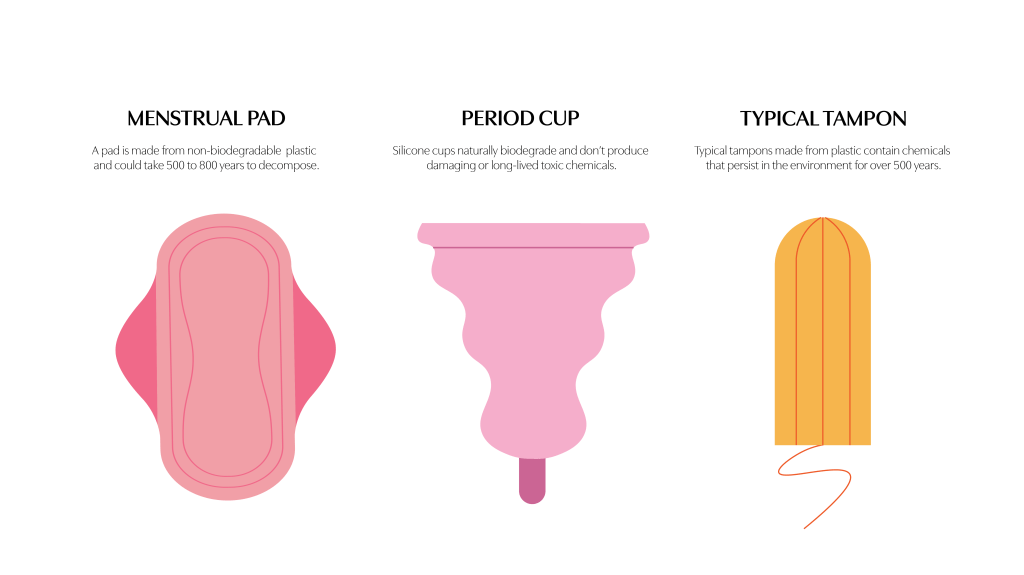
The creation and consumption of one-use menstrual products are directly harmful to the environment and to our bodies. Multiple studies and data gathered by the Women’s Environmental Network have shown that the production of most menstrual towels and tampons involves chlorine bleaching. This process results in dioxin, a chemical compound that can cause reproductive disorders, damage to the immune system, and remain in the environment for many years.

Despite the appearance and cotton-like texture, tampons and pads are composed primarily of plastic. According to the London Assembly Environment Committee conventional disposable menstrual products (including packaging) are made from up to 90% plastic and generate 200,000 tonnes of waste per year in the UK alone. Microplastics produced after disposal threaten our marine wildlife, killing up to 1 million seabirds, 100,000 sea mammals, marine turtles, and countless fish every year.

In the face of our current pollution and climate crisis, I found replacing disposable sanitary products with a re-usable cup to be a positive move to a more environmentally conscious lifestyle.

Your period also shouldn’t cost you an arm and leg, however, it doesn’t look like they will stop taxing feminine products anytime soon. On average, women spend £41 a month/ £492 a year or £18,450 over a lifetime on their period!  A cup will cost you from £10 to £40 and can last around 5 years when properly looked after (I recommend investing in a quality cup that is at least £15 with medical grade silicone).

Do not fear the unknown (FAQ)

Will it fit? Yes. Don’t be intimidated by size, these cups look big but are very small in comparison to what your vagina can naturally fit (like a baby!). As they are made of silicone, they are extremely flexible and easy to fold. If you are still uncertain there are all sizes, shapes and styles you can choose from.

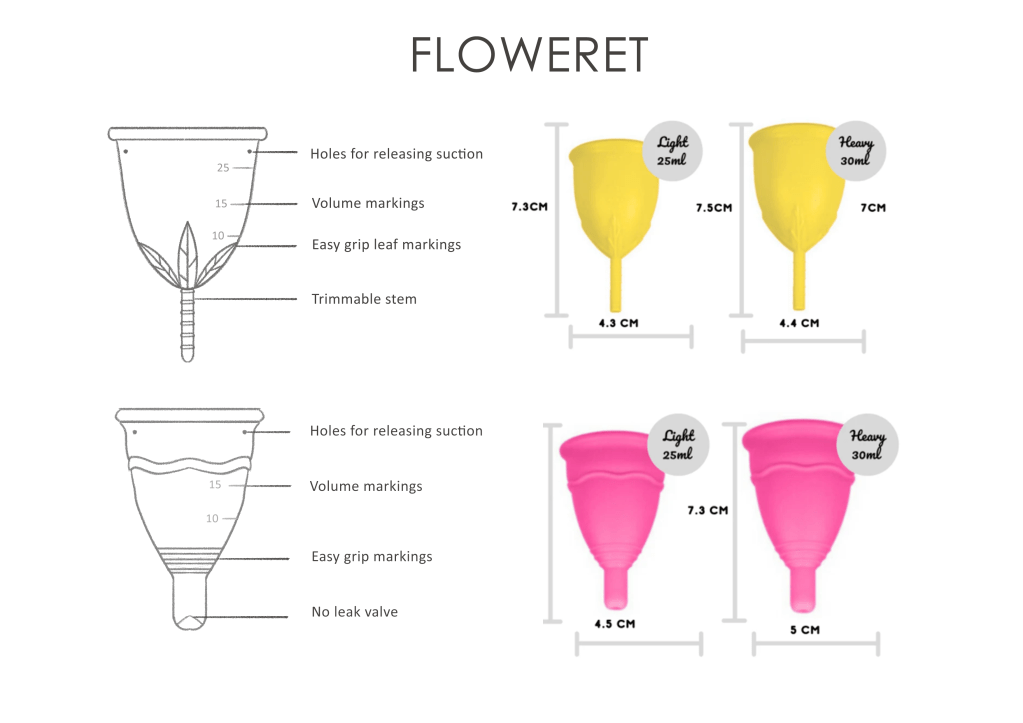
Will I feel the cup? Just like a tampon it should be undetectable. If you feel it or notice discomfort it’s most likely not inserted properly! If it’s the stem you feel you can trim it to a more comfortable length.

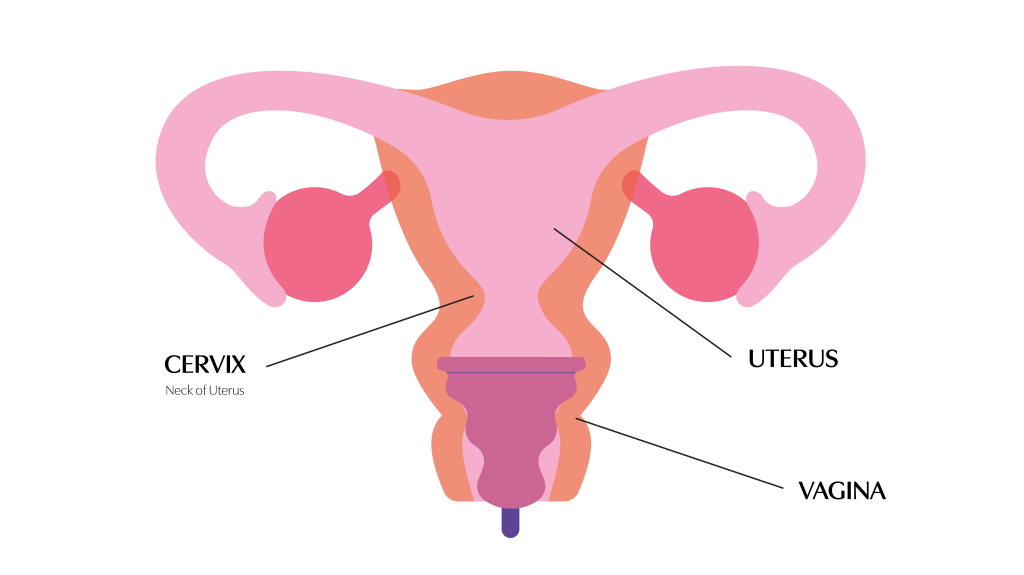
Will blood backflow? No, the cervix is an exit only, your flow cannot go back inside the uterus.

Can I wear the cup for 12 hours? Although some brands used to claim cups can be worn for 12 hours, I strongly recommend up to 8 as the maximum. After having mine in for 8 hours it was starting to smell a little. I change my cup three times a day, in the morning, midday and before bed.

Can I swim? Yes, just like when you wear a tampon when swimming.

Do I have to wear a pad too, just in case? No. If inserted properly there should be no leakage and therefore no need to wear extra protection. Speaking from experience I only had a couple drops leak when trying it for the first time, but this was from lack of experience inserting it. Just to feel extra safe I recommend wearing black pants if you’re scared of ruining a nice pair of underwear.

How do I clean my cup? Simply rinse with hot water (NOT SOAP – as this can cause irritation) until it’s clean and it’s ready to pop back in, just make sure you wash your hands well with soap and water before touching your cup to avoid transferring bacteria. It’s recommended to give your cup a thorough cleaning once a month by putting it in boiling water for 5-10 minutes.

How long can my cup last?  A close friend of mine has had a cup that lasted her 5 years, just to give an idea of how long your cup can last if you take good care of it! Once you see sticky or powdery film, severe discolouration, odour or irritation it’s recommended you replace your cup with a new one.

Can the cup get lost inside me? No. At the end of your vaginal canal where the cup sits the cervix (opening to the uterus) stops it from ‘getting lost’

I won’t lie the first time using a cup is a bit uncomfortable, it’s a strange and new experience, but you will get used to it surprisingly quickly. It’s all about having a good technique, not giving up and allowing your body to get used to the routine. It only took me one cycle before I felt comfortable and confident using my cup, on my second cycle I had no issues using it even on the first day.

Choosing your cup

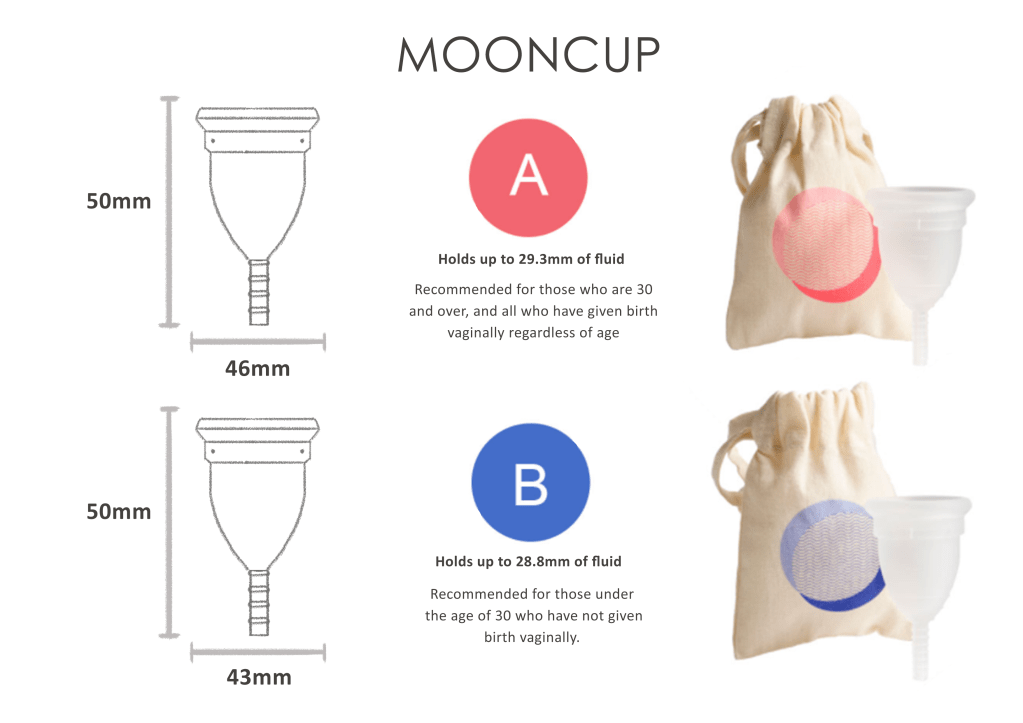
Just like pads and tampons, cups come in different sizes and it’s important you pick the right one for you. A lighter cup is recommended if you have a light flow, usually wear a pad or are a teenager. If you have had a child, or use tampons a lot a larger cup might be right choice for you.

To give you a better idea of how to pick, I’m in my early 20’s, my period lasts 4-5 days, I used medium absorption pads and tampons and I have not given birth. My chosen cup is a light cup, which can hold up to 25ml. I found I only lose 10ml in the day and 10ml at night, meaning I don’t even fill half the cup!

As the period cup market is very oversaturated, I’ve picked the best reviewed and trusted brands with classic cup shapes and sizes for you to choose from.

Floweret offers stylish quality cups in rose-inspired shapes. They are also teamed up with One Tree Planted so for every order made, a tree is planted! 

Mooncup offers the classic clear cup, available in a small and large size.

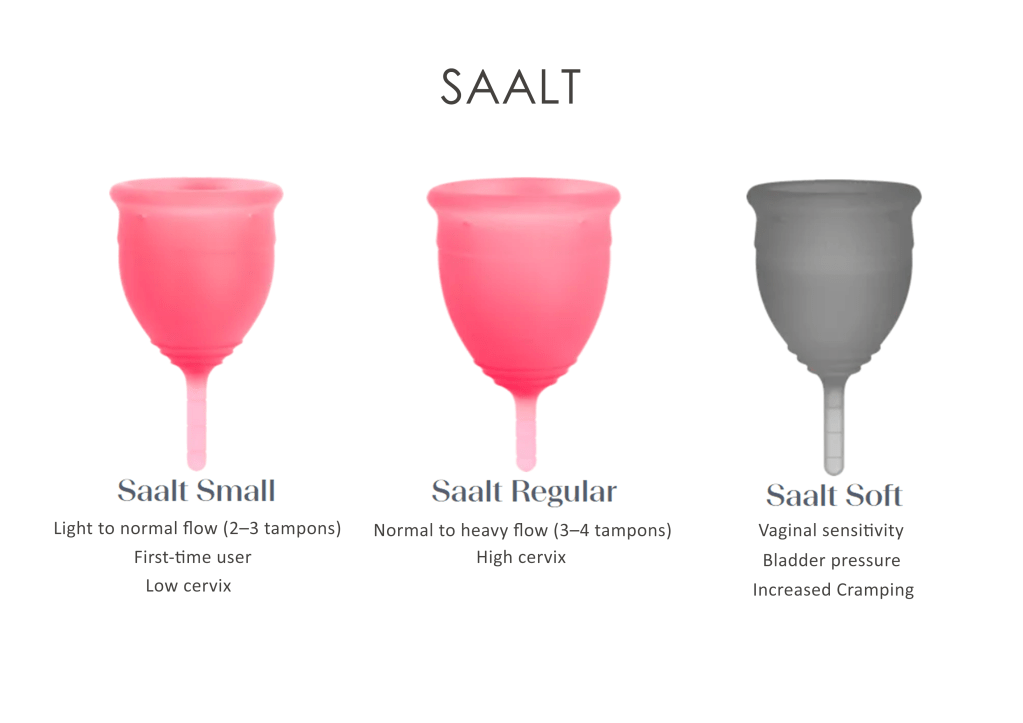
Saalt offers a unique ‘soft cup’ made with softer silicone designed for people who have had any sensitivity or discomfort with firmer cups. Saalt also donate 2% of revenue to fund period care in regions most in need.

You can also donate a cup to a girl or women in need through RubyCup.

If you are still not convinced/comfortable with a cup

TOTM offer some great alternative period products that reduce environmental impact and waste.