
There is still a lot of fear and disgust towards period cups, but I feel this is down to having little knowledge or experience with them. How do I know? I was one of these people. I thought the cup would be messy and leak, intimidatingly large or a massive inconvenience to use in general. I honestly wished I swapped sooner.
I want to debunk the fear surrounding cups, fully explain the benefits and, as a user, give my advice if you decide to get one.
Why should you make the change?
The creation and consumption of one-use menstrual products are directly harmful to the environment and to our bodies. Multiple studies and data gathered by the Women’s Environmental Network have shown that the production of most menstrual towels and tampons involves chlorine bleaching. This process results in dioxin, a chemical compound that can cause reproductive disorders, damage to the immune system, and remain in the environment for many years.
Despite the appearance and cotton-like texture, tampons and pads are composed primarily of plastic. According to the London Assembly Environment Committee conventional disposable menstrual products (including packaging) are made from up to 90% plastic and generate 200,000 tonnes of waste per year in the UK alone. Microplastics produced after disposal threaten our marine wildlife, killing up to 1 million seabirds, 100,000 sea mammals, marine turtles, and countless fish every year.
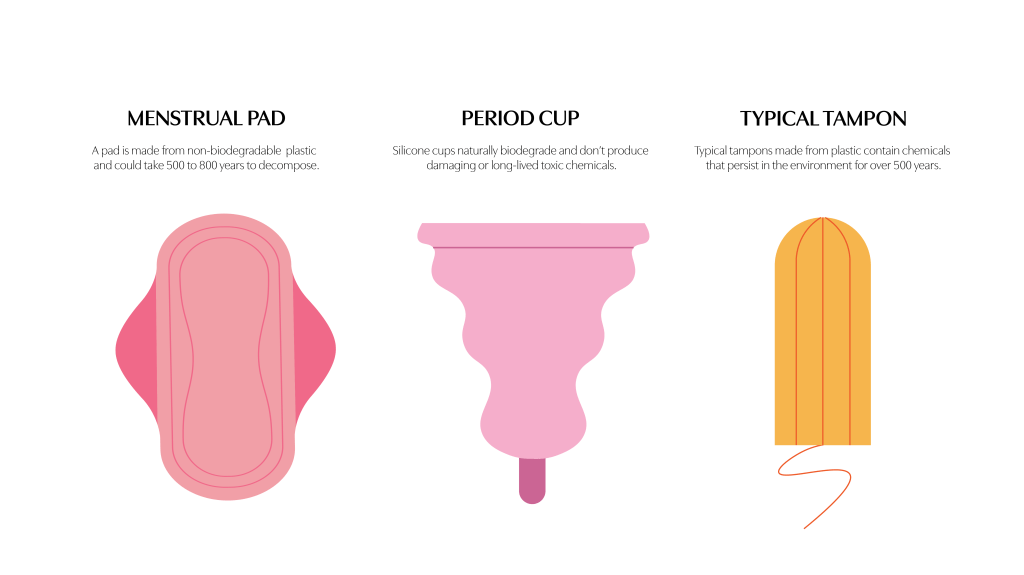
In the face of our current pollution and climate crisis, I found replacing disposable sanitary products with a re-usable cup to be a positive move to a more environmentally conscious lifestyle.
Your period also shouldn’t cost you an arm and leg, however, it doesn’t look like they will stop taxing feminine products anytime soon. On average, women spend £41 a month/ £492 a year or £18,450 over a lifetime on their period! A cup will cost you from £10 to £40 and can last around 5 years when properly looked after (I recommend investing in a quality cup that is at least £15 with medical grade silicone).
Do not fear the unknown (FAQ)
Will it fit? Yes. Don’t be intimidated by size, these cups look big but are very small in comparison to what your vagina can naturally fit (like a baby!). As they are made of silicone, they are extremely flexible and easy to fold. If you are still uncertain there are all sizes, shapes and styles you can choose from.
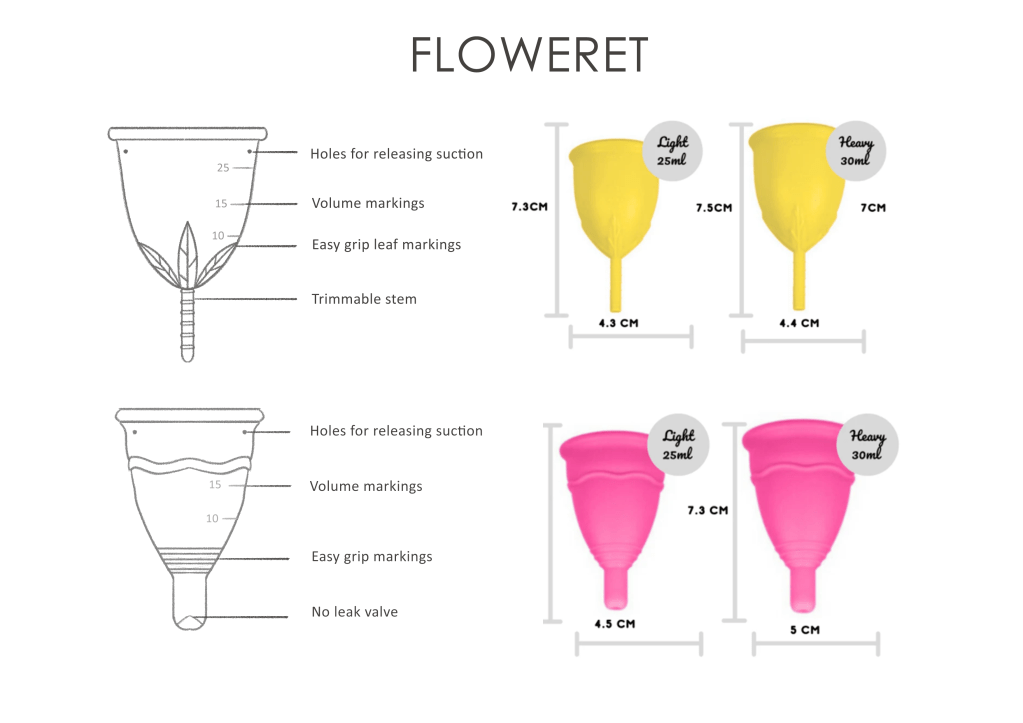
Will I feel the cup? Just like a tampon it should be undetectable. If you feel it or notice discomfort it’s most likely not inserted properly! If it’s the stem you feel you can trim it to a more comfortable length.
Will blood backflow? No, the cervix is an exit only, your flow cannot go back inside the uterus.
Can I wear the cup for 12 hours? Although some brands used to claim cups can be worn for 12 hours, I strongly recommend up to 8 as the maximum. After having mine in for 8 hours it was starting to smell a little. I change my cup three times a day, in the morning, midday and before bed.
Can I swim? Yes, just like when you wear a tampon when swimming.
Do I have to wear a pad too, just in case? No. If inserted properly there should be no leakage and therefore no need to wear extra protection. Speaking from experience I only had a couple drops leak when trying it for the first time, but this was from lack of experience inserting it. Just to feel extra safe I recommend wearing black pants if you’re scared of ruining a nice pair of underwear.
How do I clean my cup? Simply rinse with hot water (NOT SOAP – as this can cause irritation) until it’s clean and it’s ready to pop back in, just make sure you wash your hands well with soap and water before touching your cup to avoid transferring bacteria. It’s recommended to give your cup a thorough cleaning once a month by putting it in boiling water for 5-10 minutes.
How long can my cup last? A close friend of mine has had a cup that lasted her 5 years, just to give an idea of how long your cup can last if you take good care of it! Once you see sticky or powdery film, severe discolouration, odour or irritation it’s recommended you replace your cup with a new one.
Can the cup get lost inside me? No. At the end of your vaginal canal where the cup sits the cervix (opening to the uterus) stops it from ‘getting lost’
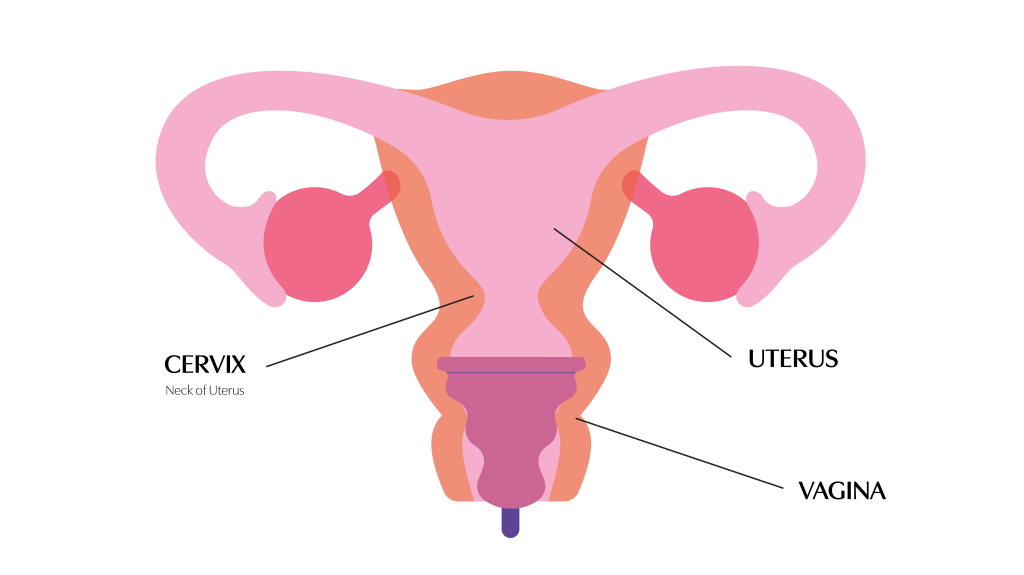
I won’t lie the first time using a cup is a bit uncomfortable, it’s a strange and new experience, but you will get used to it surprisingly quickly. It’s all about having a good technique, not giving up and allowing your body to get used to the routine. It only took me one cycle before I felt comfortable and confident using my cup, on my second cycle I had no issues using it even on the first day.
Choosing your cup
Just like pads and tampons, cups come in different sizes and it’s important you pick the right one for you. A lighter cup is recommended if you have a light flow, usually wear a pad or are a teenager. If you have had a child, or use tampons a lot a larger cup might be right choice for you.
To give you a better idea of how to pick, I’m in my early 20’s, my period lasts 4-5 days, I used medium absorption pads and tampons and I have not given birth. My chosen cup is a light cup, which can hold up to 25ml. I found I only lose 10ml in the day and 10ml at night, meaning I don’t even fill half the cup!
As the period cup market is very oversaturated, I’ve picked the best reviewed and trusted brands with classic cup shapes and sizes for you to choose from.
Floweret offers stylish quality cups in rose-inspired shapes. They are also teamed up with One Tree Planted so for every order made, a tree is planted!
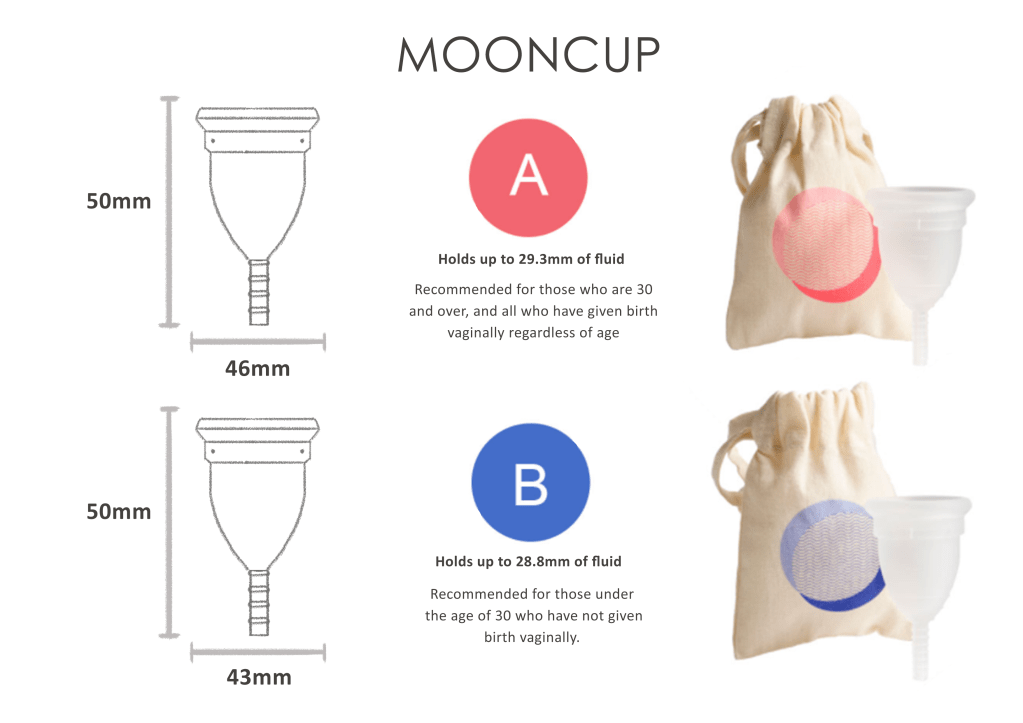
Mooncup offers the classic clear cup, available in a small and large size.
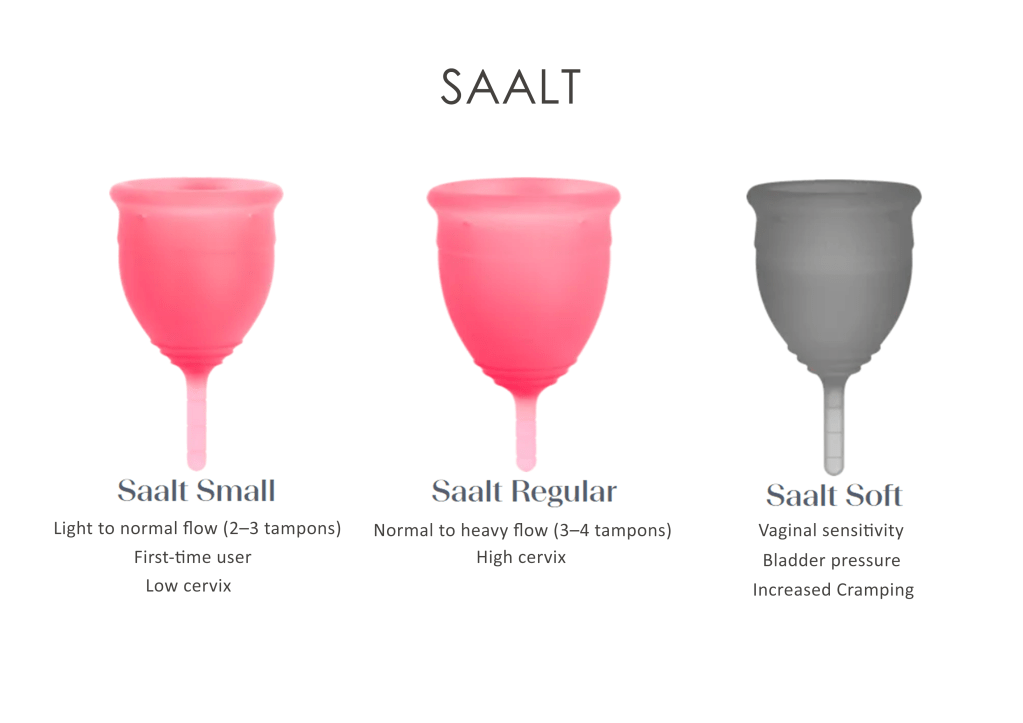
Saalt offers a unique ‘soft cup’ made with softer silicone designed for people who have had any sensitivity or discomfort with firmer cups. Saalt also donate 2% of revenue to fund period care in regions most in need.
You can also donate a cup to a girl or women in need through RubyCup.
If you are still not convinced/comfortable with a cup
TOTM offer some great alternative period products that reduce environmental impact and waste.
 Francesca Luisi